
Choquequirao + Machu picchu Trek 8 Days – Unique.

(1 Review)
Price
From$950
Price
From$950
Booking Form
Enquiry Form
Full Name*
Email Address*
Your Enquiry*
* I agree with Terms of Service and Privacy Statement.
Please agree to all the terms and conditions before proceeding to the next step
Available: 12 seats
* Please select all required fields to proceed to the next step.

Proceed Booking

Save To Wish List

Adding item to wishlist requires an account

340

Do you have any questions or need assistance?

We’re here for you. Don’t hesitate to call us and speak with our team of skilled professionals.

+51 984751486

perutravelcompany@gmail.com

perutraveldev

Length

5 Days, 4 Nights
perutraveldev

Group

Min 2, Max 12.
perutraveldev

Trip Style

Trekking Tours
perutraveldev

Difficulty.

Moderate.
Overview

Locations Visited: Choquequirao citadel

Frequency : Upon request

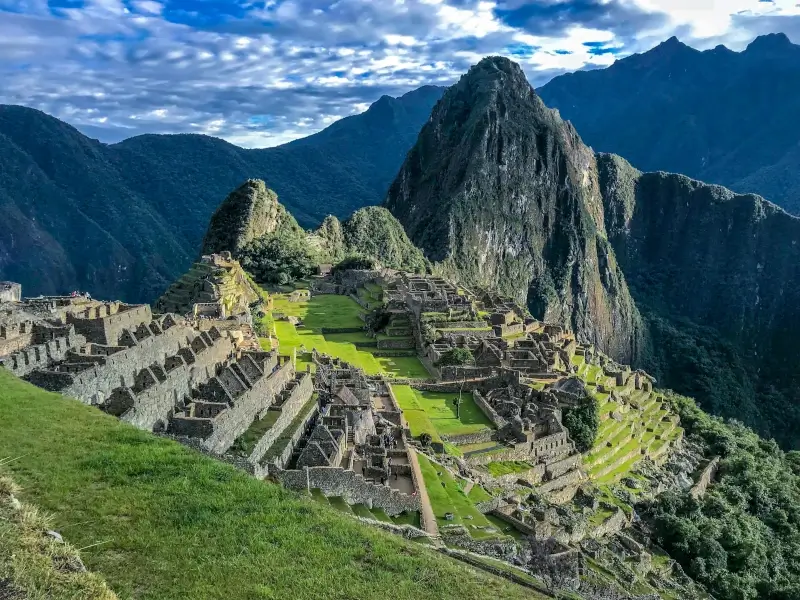
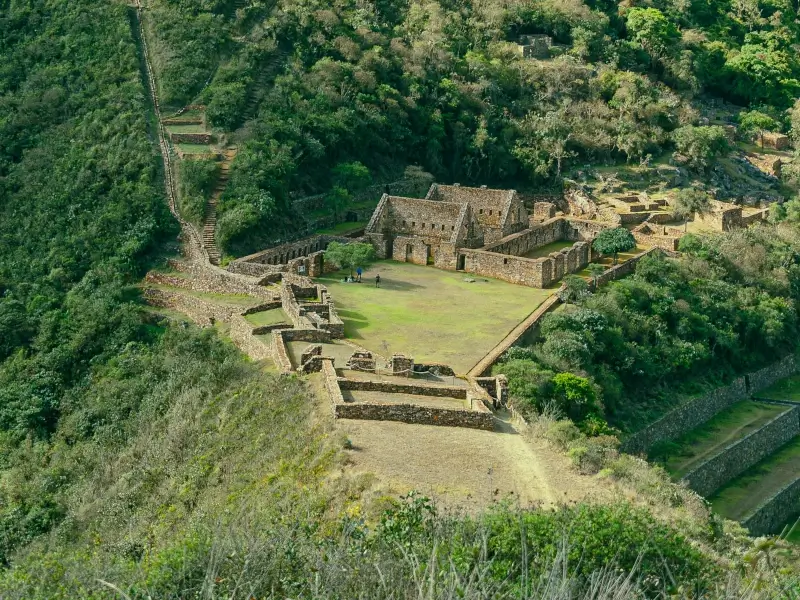
Choquequirao, The sister of  Machupicchu means “Cradle of Gold” in Quechua “Inca´s language”, although this is probably not its original name. It is another “Lost City of the Incas” rediscovered officially late in 20th century located high on a ridge spur almost 1750mts above the raging glacier-fed Apurimac River and surrounded by towering Salkantay and Humantay snow-capped peaks.

Choquequirao was build during the last days of the Inca empire in the government of the Inca Pachacutec 1490, by Tupac Inca Yapanqui, and probably after the Spanish invasion in 1532. Almost 40 years the Inca’s held stand against the spanish conquerors (between 1536 – 1572). The construction of the different levels of temples, palaces, canals and aqueducts is really fantastic. “Choquequirao is the city which demonstrates the inspiring example of an elite Inca ceremonial center. A city dedicated to worship the “Pachamama” the andean mother earth “the Apus” mountain gods and divinities, the river and the elements of nature.” Choquequirao finally burned down and left deserted. This happened probably after the execution of the last Inca, Tupac Amaru I in 1572.

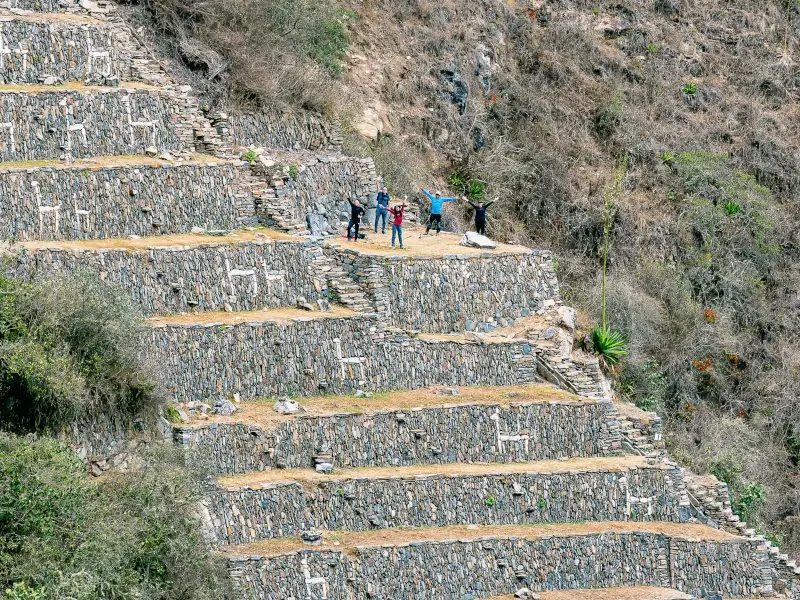
By this occasion, the plaster covering the walls, carbonized and disappeared for the most part. At the east side of the complex more then 110 terraces with houses and squares are being revealed. At the west side another 170 terraces are hidden and covered by the forest, in some of these terraces can be seen now an amazing in straight line white color llamas in symetrical order, Until now only 25% is put to overdraft and conserved. With this Choquequirao is the largest Inca-town of the continent and much larger then Macchu Pichu. For the first time in 1710 they mentioned the existence of Choquequirao. The first drawings of the structure of the ruins were made about 1836 by the Frenchmen Léonce Angrand and them by Eugine Sartigues.

Useful Info: 

Choquequirao Weather.

Dry season (April – November)

  • Day temperature 20ºC/35ºC
  • Night temperature 5 ºC/10ºC
  • Wet season (December – March)
  • Day temperature 17ºC/22ºC
  • Night temperature 0 ºC/7ºC

Advice for Hikers.

Is recommendable have yellow fiber vaccination (malaria) because you will be 3 days in the high jungle. We never hear news about problems with malaria in this zone but are better to be prepared.
It is also important to be well acclimatized to the altitude for that try to spend 2 nights in Cusco (3400m) prior to do the trek.

Local kids and adults .

Along the way you will met many people, specially kids walking long distance to arrive at school and study 5 hours and they back home after maybe 30 minutes or 2 – 4 hours depending how far they live from the school. Normally they are son or daughter of poor farmers living on the mountains. We strongly recommend help us to give some present to them like pencils, notebook, dictionaries, toys, clothes (socks, gloves, hat, t-shirt, etc) and something to eat. We don’t recommend giving them things like candies, chew gun, soda, camping knife or money. If you really like to make picture of them, especially of adults we strongly advise you to ask first. If you don’t speak any word of Spanish language (español) coordinate with your guide to see if is possible to have picture of them. Local people don’t permit take picture of them, because they believe you taking their spirit on your camera.

Hire Horse  and Horseman.

Horses can carry up to 120 Kg = $140 USD for the full duration of the tour ( $35 USD per day). Each horse comes equipped with saddle and assistant who will provide food and care the horse every day.
Riding a horse you will need to carry a daypack with your Camera, bottle of water, snacks, a fleece or something warm and a poncho in case of rain (unlikely in Dry season but as a precaution). Your bag will be waiting for you in your tent at campsites.

Inclusions

  • Briefing before the trek: The tour guide will brief you the day before the excursion at around 7:00 p.m. Please let us know where you will be staying in Cusco.
  • Hotel Pickup: We will pick you up from your hotel starting at 4:30 a.m
  • Experienced and licensed Tour guide: Spanish, English and Quechua speaking guides will accompany you during the excursion, to immerse you in the history, culture and conclude 2 hours and 30 minutes guide tour in Machu picchu.
  • Transport from : Cusco to Cachora (starting point).
  • Entry tickets to Choquequirao and Machu Picchu : Generally, the Machu Picchu entrance ticket is scheduled for 7:00 or 8:00 a.m.: CIRCUIT 02 (subject to availability) and, alternatively, CIRCUITS 01 and 03 (subject to availability). During the high season, tickets can be difficult to get, but don’t worry: we are here to help you get them in Aguas Calientes.
  • Muleteers + horses to carry : This experienced team will transport all necessary gear and supplies on horses or mules, so you can enjoy the trek without having to carry heavy loads.
  • Duffel Bag: At the pre-trek briefing, you will receive a duffel bag for up to 5 kg of belongings. Our team will transport it by horse, and you can collect it at the campsites. This allows you to hike comfortably with only your daypack. At the end of the trek, please return the duffel bag to our office or leave it at your hostel in Cusco.
  • Expert local chefs: We have experienced cooks trained in adventure and mountain cooking. We use new kitchen equipment and kitchenware, as well as a dining tent with portable chairs and tables.
  • Meals: Enjoy nutritious meals during the excursion (4 breakfasts, 4 lunches and 4 dinners), with a free vegetarian option upon request in advance.
  • Drinking Water: We provide boiled water after every breakfast, lunch, and dinner for refilling bottles. You can also buy water at local shops along the way. The price for a 2.5-litre bottle is typically between 5 and 12 soles. Alternatively, you may choose to bring a water filter or purification tablets for mountain water.
  • Accomodations: 6 nights Camping and 1 night hostel in aguas calientes.
  • Sleeping Mattresses: We provide foam sleeping mattresses. If you prefer a more comfortable option, air mattresses are also available for hire.
  • First Aid Kit: We provide a fully stocked first aid kit for your safety and convenience.

Excludes

  • Meals: Breakfast on the first morning and lunch on the last day after Machu Picchu
  • Round Trip bus tickets from: Aguas Calientes – Machu Picchu – Aguas Calientes. You can purchase them in Aguas Calientes or after visiting the site. Each way costs US$12. Alternatively, you can walk- it's about 1 hour and 30 minutes each way.
  • Hot Springs: If you would like to relax in the thermal baths in Santa Teresa costs 50 soles in total, including round-trip transport (40 soles) and entrance (10 soles). You can decide and pay during the trek and at Aguas Calientes costs 20 soles in total, payable at the entrance.
  • Personal Horse US$ 65
  • Sleeping bag: If you don't have a sleeping bag, you can rent one from us. The sleeping bags we have are specially designed to keep you warm during the trek, where temperatures can be as low as -10°C. The rental cost is 40 soles (10 dollars) for the whole trip.
  • Hiking water proof boots: with ankle protectors.
  • Gratuities for Guides and Staff : Tips for guides, drivers, horsemen, and staff are not included. Tipping is optional but appreciated. While the trek team may expect tips, it is entirely up to you. We want to emphasize that tipping is voluntary, not mandatory.
  • Travel Insurance: We would advise acquiring one in your country of residence, as obtaining travel insurance in Peru can be Difficult .
  • Huayna Picchu or Machu Picchu Mountain Hike: $70 USD (optional, upon request). After the main tour, you can hike up Huayna Picchu or Machu Picchu Mountain.
  • Trekking poles: We really recommend them for the Salkantay Trek and they are very useful. You can rent them from us.

What to Bring:

  • Original passport: It is very important that you travel with your original passport – copies are not accepted. Make sure it is valid for at least six months after your travel dates and has at least two blank pages for entry and exit stamps.
  • Student ID: This is required only if you booked the Salkantay Trek as a student. You must present a valid university student card (up to age 25) with your photo, personal details, university name, and a validity date through 31 December of your travel year.
  • Good-quality daypack: It's really important to find a good backpack that's comfortable, light and small, to fill in and carry all your belonging
  • Botle water or Camel Bag: The bottle needs to hold 2 litres of water. It is important to choose a water bottle that can keep your water cold.
  • Trekking poles: We really recommend them for the Salkantay Trek and they are very useful. You can rent them from us.
  • Hiking water proof boots: with ankle protectors
  • Sleeping bag: when you buy a sleeping bag find one that is big enough for you. and put it in a waterproof bag so it doesn't get wet on the hike. also we recommend sleeping bags that can keep you warm down to -10°C. You can also rent sleeping bags from us.
  • Head lamp: This equipment is essential for anyone taking the Salkantay Trek to Machu Picchu. You can also bring a torch.
  • Emergency money: Please remember to bring extra money for any emergencies that might happen on the trip. is ideal to bring 300 soles/90 dollars and in cash.
Itinerary

DAY 01 :Cusco – Cachora – Playa Rosalina

(Apurimac River) At 5am we will pick up our customers from their hotels, and then we will transfer by our private van to Cachora (4 hours), once we will meet the rest of team (Arrieros and horses). Then we will begin trek go uphill, passing through the high pass of Capuliyoc, where we might see condors and great view of the Apurimac Canyon. Finally we descend through Cactus forest to playa Rosalina on the banks of the Apurimac River, the main tributary of the Amazon River. Camping at playa Rosalina (1550m) .

  • Meals:  L, D
  • Accommodation: Camping 4 people tents  for  2 people per tents
  • Maximum Altitude:3000 masl Capulichayoc
  • Minimum Altitude:1750 masl chiquisca
  • Distance Travelled:16 Km
  • Approximate Walking Time:6 – 7 Hours

DAY 02 : Playa Rosalina – Marampata – Choquequirao

(Golden Cradle) After early breakfast strenuous 5 hours of uphill trek through a long and narrow trail, surrounded by beautiful vegetation with several varieties of orchids. Half way up stop for lunch at Maranpata, then continue hiking to more hours to Chokekirao (Golden Cradle), is considered the sister city of Machu Picchu, because of several similarities, it hangs 1500m above the Apurimac Canyon, and Machu Picchu hang above the Urubamba canyon. The view of the canyon is spectacular; it is also possible to see Andean Condors soaring in the mountains. Camping near of Chokekirao (3050m).

  • Meals: B, L, D
  • Accommodation:Camping 2 people per tents
  • Maximum Altitude:2800 masl Marampata
  • Minimum Altitude:1750 masl chiquisca
  • Distance Travelled:15 km
  • Approximate Walking Time:7- 8 Hours

DAY 03 : Choque quirao Pass – Rio Blanco – Maizal.

Breakfast will at 7am and then start our trek passing the Choquequirao ruins, up hill through cloud forest, Mountains and valleys to reach the Choquequirao pass. After 5 hours trekking the trail continue through agricultural terraces called Pinchinoyoc which means (water jumping forward – 2750m). There will observe different species of birds, different varieties of orchids, and local coca plantations. We will have our lunch near the Rio Blanco, we use the brake here to get a refreshing bath in the cold and clear river water. We cross walking through the river, since there are no bridges. After our brake we start the long and steep climb to our camp in Maizal, high over the river close to the sacred Apus of the Incas. From Rio Blanco we climb up to Maizal for about 3 hrs. Camping at 3000m .

  • Meals: B, L, D
  • Accommodation:Camping 2 people per tents
  • Maximum Altitude:3000 masl  Choquequirao
  • Minimum Altitude: 2750 masl chiquisca
  • Distance Travelled:12 km
  • Approximate Walking Time:7- 8 Hours

DAY 04 : Maizal – Minas Victoria – Yanama.

Early morning trek around the Corihuarachina glacier, important due to some archaeological remains such as Inca channels. From here we start walking uphill passing by the impressive Inca mines called Minas Victoria and towards the Victoria Pass. Again a long climb, but we walk in amazingly beautiful area – first with cloud forest and then over Andean Puna with the well known Ichu grass. Then we pass through Minas Victoria, a place that during the colony, silver was extracted from a mine. Almost on the top we can apreciate original paved Inca trails. We take our box lunch at the pass in 4200m with view of the mountain Choquetakarpo, while we had lunch we will be able to appreciate the flight of the condors depending on the climate, and finally descend to our campsite at Yamana, a small isolated settlement at the bottom of a long valley surrounded by mountains (3800m) .

  • Meals: B, L, D
  • Accommodation:Camping 2 people per tents
  • Maximum Altitude:3000 masl Maizal – Minas Victoria
  • Minimum Altitude:3800 masl Yanama
  • Distance Travelled:14 km
  • Approximate Walking Time: 8  – 9 Hours

DAY 05: Yanama – Totoral Mountain Range.

After early breakfast trekking uphill to the highest pas in this trek, named Yamana. Again the view will be amazing from here we will be surrounded by mountain range of Saqsarayoc and Pedreyoc. Once again we have the chance to see condors, and this mornings smooth climb bring us through new landscapes – especially the wet grass fields under the snowline that distinguish from everything else seen on the tour. In the pass we might walk in snow, and the descent is a long foggy hike through grassy fields- and bush areas and crossing small poor wood bridges on the way towards the community of Totoral, where we spend the in tents in a indescribable beauty, surrounded by pure nature .

  • Meals: B, L, D
  • Accommodation:Camping 2 people per tents
  • Maximum Altitude:4250 masl Yanama
  • Minimum Altitude:3850 masl totorayoc
  • Distance Travelled:14 km
  • Approximate Walking Time: 8  – 9 Hours

DAY 06 : Totoral – Cloud Forest – La Playa.

Today the trekking will be 7 hours, descending 2000m into Totora River. We will observe the natural wildlife, such as hummingbirds, woodpeckers, many species of orchids and begonias. Then we descend the trail on the left side of the Santa Teresa River where we will see small plantations of bananas, passion fruit, and coffee. On the way will stop at small waterfalls and get a refreshing natural bath. The area also has a big variation of bird the climate and vegetations have changed totally. The Playa is the biggest village on the way, where we can find some small shops to buy snack etc. In this area we can see small plantations of coffee and bananas. Campsite at 2125m .

  • Meals: B, L, D
  • Accommodation:Camping 2 people per tents
  • Maximum Altitude: 3850 masl Totoral
  • Minimum Altitude:2125 masl La Playa.
  • Distance Travelled:13 km
  • Approximate Walking Time:7- 8 Hours

DAY 07: La Playa – Santa Teresa – Hodrolectrica – Aguas Calientes.

Alter a good breakfast will took a transport that takes us until the town of Santa Teresa, we cross a river of the Vilcanota. Where we will take a transport to Planta de Hidroeléctrica, place where we will have an excellent view of a different angle of Machu Picchu and the Aobamba canyon, where another Inca trail can be seen, also here we will have our last lunch. After good rest and walk 3 hours to reach Aguas Calientes. Optional visit the hot spring located next to the town. We will spend the night in Hostel.

  • Meals: B, L, D
  • Accommodation:Camping 2 people per tents
  • Maximum Altitude:2800 masl La Playa.
  • Minimum Altitude:1750 masl Aguas Calientes Pueblo.
  • Distance Travelled:11 km
  • Approximate Walking Time:7- 8 Hours

DAY 08: Aguas Calientes – Machu Picchu – Cusco.

After an early breakfast from Aguas Calientes we walk or take bus to Machu Picchu, there, we will have a guided tour for all the Archaeological Site, then we will have free time to be on our own in Machu Picchu, maybe to climb the Wayna Picchu or visit the moon temple. At mentioned time you will meet the guide and then come back to Aguas Calientes (3pm) to catch the train back to Cusco arriving at 8pm aprox

  • Meals: B, L.
  • Accommodation:Camping 2 people per tents
  • Maximum Altitude:2100 masl Aguas Calientes.
  • Minimum Altitude:1750 masl Machu picchu citadel.
  • Distance Travelled:15 km
  • Approximate Walking Time:7- 8 Hours
Photos
FAQs

1.What is Choquequirao, and where is it located?

Choquequirao is an ancient Inca city often referred to as the “sister city” of Machu Picchu. It is located in the Vilcabamba mountain range in the Cusco region of Peru, at an altitude of around 3,050 meters (10,010 feet) above sea level. The site is known for its remote location and stunning archaeological remains.

2.How difficult is the hike to Choquequirao?

The hike to Choquequirao is considered challenging, requiring a good level of physical fitness. The trek typically takes 4 to 5 days round-trip and involves steep ascents and descents, crossing valleys and rivers. The journey is demanding but rewarding, offering breathtaking views of the Andes and a unique experience at the less-crowded archaeological site.

3.Is Choquequirao similar to Machu Picchu?

While Choquequirao shares some similarities with Machu Picchu, such as its Inca architecture and mountain location, it is less excavated and much less visited. This gives Choquequirao a more authentic and serene atmosphere. The site is also larger than Machu Picchu, with many of its structures still covered by jungle, adding to its sense of mystery.


4.What is the best time of year to visit Choquequirao?

The best time to visit Choquequirao is during the dry season, which runs from May to September. During these months, the weather is more predictable, with clear skies and less rain, making the trek safer and more enjoyable. The rainy season, from October to April, can make the trails muddy and more difficult to navigate.


5.What wildlife can I expect to see during the Choquequirao trek?

The trek to Choquequirao offers the chance to see a variety of wildlife, especially birds. You might spot Andean condors soaring above the valleys, as well as other bird species like hummingbirds and toucans. Mammals such as spectacled bears, deer, and foxes may also be seen, though they are more elusive. The diverse ecosystems you pass through, from cloud forests to high-altitude grasslands, are home to a rich array of flora and fauna.

1 Review
Sort By:RatingDate

Javier M.

Solo Traveller

Embark on the 8-Day Choquequirao & Machu Picchu Trek for a truly unique adventure, exploring the remote ruins of Choquequirao and the iconic Machu Picchu in a breathtaking journey.

February 1, 2024