
Choquequirao Trek 4 Days – Classic.

(1 Review)
Price
From$320
Price
From$320
Booking Form
Enquiry Form
Full Name*
Email Address*
Your Enquiry*
* I agree with Terms of Service and Privacy Statement.
Please agree to all the terms and conditions before proceeding to the next step
Available: 12 seats
* Please select all required fields to proceed to the next step.

Proceed Booking

Save To Wish List

Adding item to wishlist requires an account

411

Do you have any questions or need assistance?

We’re here for you. Don’t hesitate to call us and speak with our team of skilled professionals.

+51 984751486

perutravelcompany@gmail.com

perutraveldev

Length

4 days, 3 nights
perutraveldev

Group.

Min 2, Max 12.
perutraveldev

Trip Style

Trekking, Adventure.
perutraveldev

Difficulty.

Moderate.
Overview


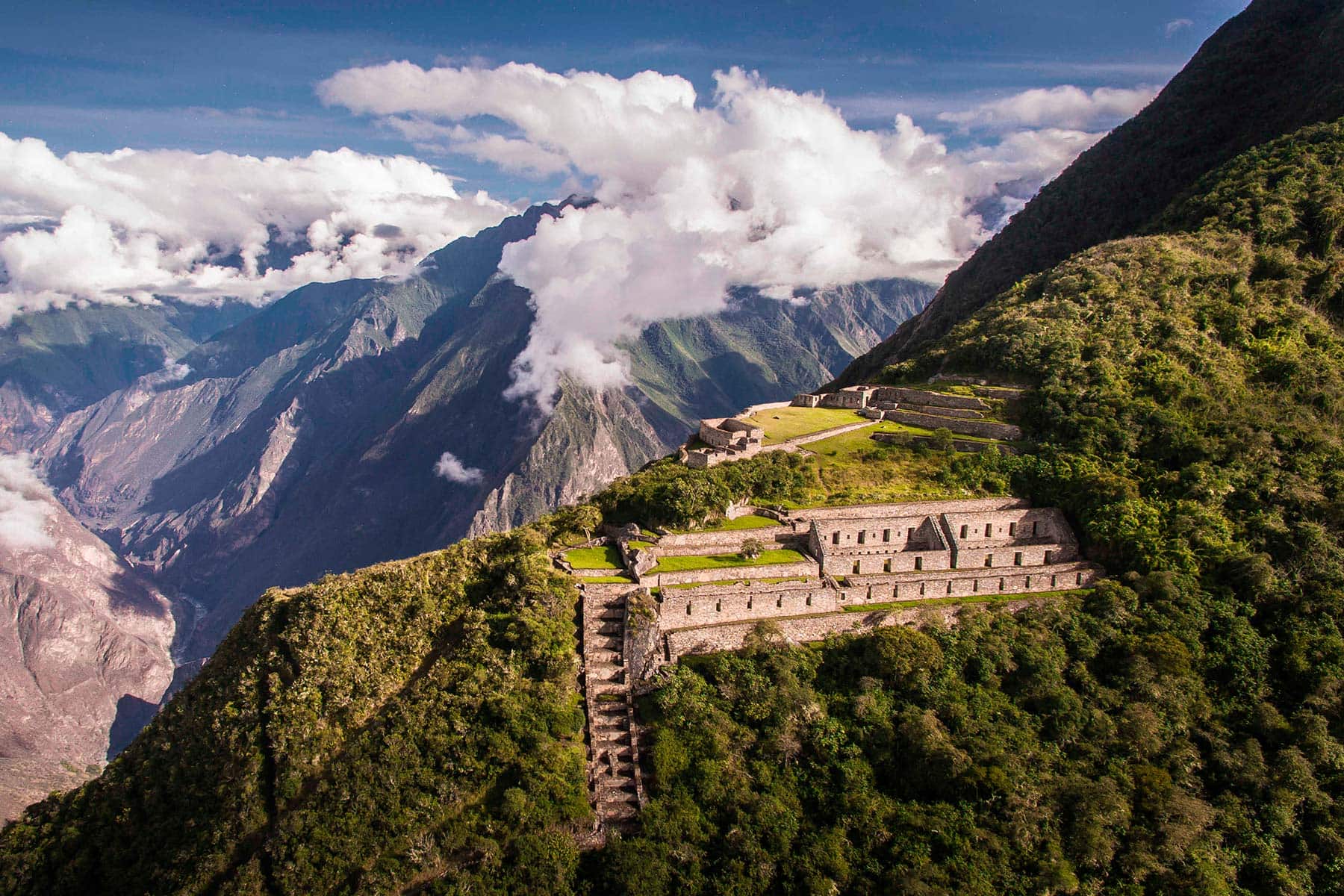
Embark on the Choquequirao Trek, a 4-day journey to the awe-inspiring “Cradle of Gold.” This hidden gem, often referred to as Machu Picchu’s sister city, sits majestically on a ridge overlooking the Apurimac River, encased by the snow-capped peaks of Salkantay and Humantay.

On this trek, you’ll enjoy Peru’s natural beauty and explore an archaeological site that’s less crowded than Machu Picchu

Experience the fascinating views of the inter-Andean valleys and discover the rich flora and fauna that inhabit these sacred lands. You’ll appreciate the majestic fortress perched on a ridge overlooking the Apurímac River and surrounded by the snow-capped peaks of Salkantay and Humantay.

Short history

Constructed during the twilight years of the Inca Empire under the reign of Inca Pachacutec and further expanded by Tupac Inca Yupanqui, Choquequirao is a testament to the Incan resistance against Spanish conquest, remaining a stronghold until the late 16th century.

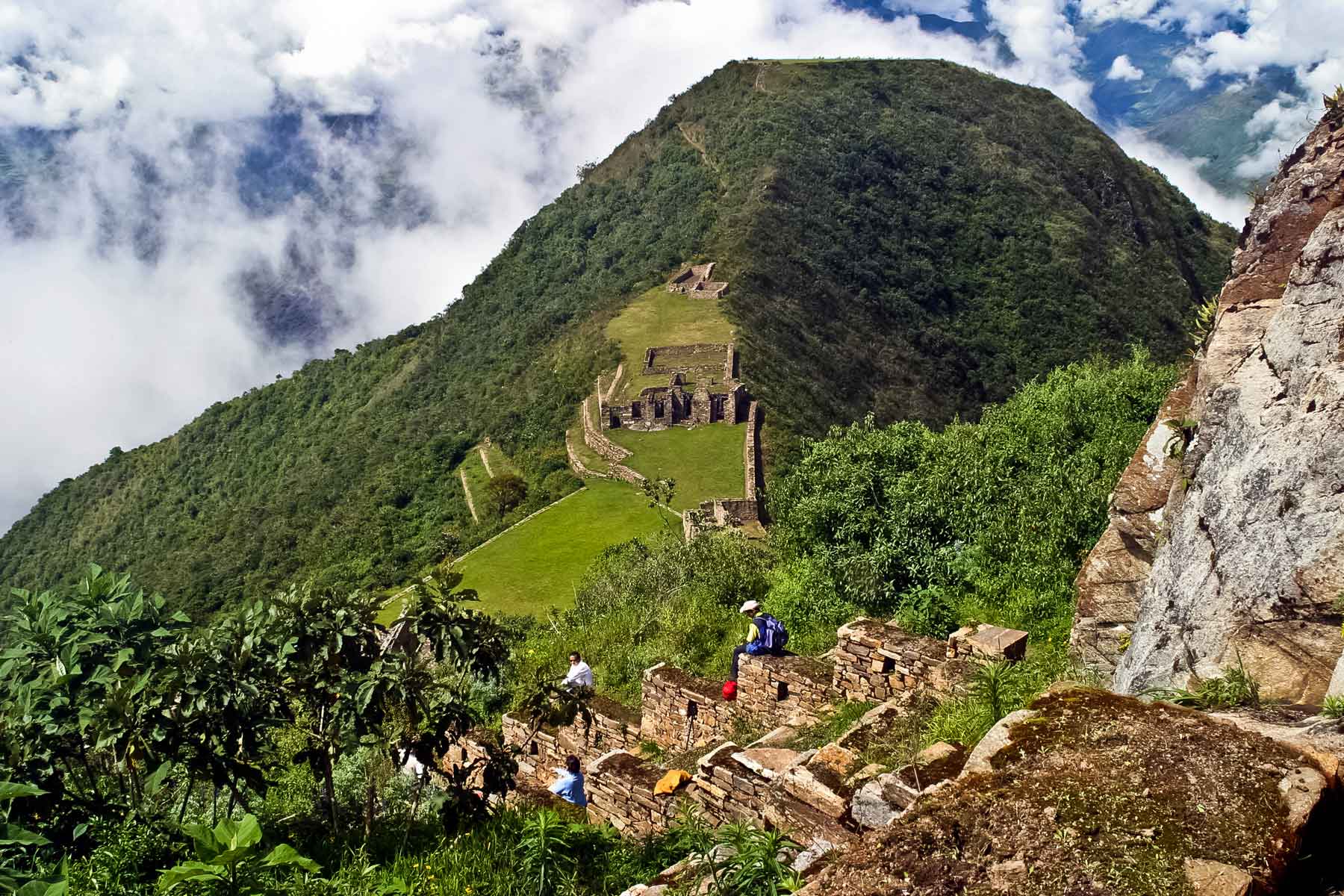
The site is an architectural marvel, with various levels showcasing temples, palaces, canals, and aqueducts, dedicated to the worship of Pachamama, Apus, and other Andean deities. Despite being officially rediscovered in the 20th century, much of Choquequirao remains enveloped by the forest, with only about 25% currently excavated and conserved, revealing over 280 terraces adorned with white stone llamas.

Choquequirao stands as the largest Inca city on the continent, surpassing even Machu Picchu in scale. Its existence was first documented in 1710, with the earliest detailed studies conducted in the 19th century. This trek is not just a physical journey but a voyage back in time, offering a glimpse into the sophisticated civilization of the Incas and their deep connection with nature.

Inclusions

  • Safety Briefing Before the Trek: A mandatory briefing will be conducted by your guide the evening prior to the excursion, at approximately 7:00 p.m. Kindly provide the name of the hotel where you will be staying in Cusco to ensure proper coordination.
  • Hotel Pickup: We will collect you from your hotel between 4:30 and 5:00 a.m.
  • Entrance tickets to Choquequirao : We handle the purchase and secure your entrance tickets to Machu Picchu in advance. During peak seasons, tickets can be in high demand and sometimes difficult to obtain. But don’t worry, we’re here to guide you through the process and help ensure you get your ticket to this iconic site.
  • Experienced and licensed Tour guide: Spanish, English and Quechua speaking guides will accompany you during the excursion, to immerse you in the history and culture at Choquequirao.
  • Transport from : Private Tourist bus transfer from your hotel in Cusco to Cachora - capuliyoq , “start of the excursion”, and return to Cusco after completing the hike. We will transfer you to your hotel in Cusco.
  • Expert local chefs: We have experienced cooks trained in adventure and mountain cooking. We use new kitchen equipment and kitchenware, as well as a dining tent with portable chairs and tables.
  • Accommodations: 3 nights in spacious panoramic cabin for 2 people, Each place to sleep has comfortable mattresses to have a peaceful sleep. but dont forget to bring or rent a sleeping bag.
  • Meals: Enjoy nutritious meals during the excursion (3 breakfasts, 3 lunches and 3 dinners). The food is balanced to keep you energized along the way, with a free vegetarian option upon request in advance.
  • Duffel Bag: At briefing or meeting one day before the trekking, you will be given a duffle bag in which you can put up to 5 kilos of your belongings. Our team will carry these duffels on horses during the trek, and you can get them at the campsites. This means you can hike comfy with just your daypack. When your trek ends and you return to Cusco, you must return them to our office or leave at hostel.

Excludes

  • Meals (breakfast and Lunch) :Breakfast on the first morning and lunch on the last.
  • Sleeping bag: If you don't have a sleeping bag, you can rent one from us. The sleeping bags we have are specially designed to keep you warm during the trek, where temperatures can be as low as -10°C. The rental cost is 40 soles (10 dollars) for the whole trip.
  • Trekking poles: if you dont have them, you can rent from us for the rental cost 10 dollars, the trekking poles are very useful on steep and rough ground. which improves your performance during the excursion.
  • Toilets and showers along the way: toilets are free at each camp site, but during the trek locals may charge 1 sol for using theirs, as well 10 soles for hot showers at the second camp site. while cold showers are free at each camp site. you can take a hot shower at the Aguas calientes hostel on the third day for free.
  • Drinking water: we dont provide water for refilling cannteen or bottles, but will provide cold/hot at each meal, but you can buy a long the way for cost between 5 to 12 soles per 2.5 litres or you can take a purification tablets for mountain wate
  • Travel Insurance: We would advise acquiring one in your country of residence, as obtaining travel insurance in Peru can be Difficult .
  • Gratuities for Guides and Staff : Tips for guides, drivers, horsemen, and staff are not included. Tipping is optional but appreciated. While the trek team may expect tips, it is entirely up to you. We want to emphasize that tipping is voluntary, not mandatory.

What to Bring

  • Original passport: you can't use a copy of your passport; you need to make sure your original passport is valid for at least six months to enter and leave Peru. Also, make sure your passport has two blank pages for the stamps when you come in and out.
  • Student ID: This is only required if you have booked the Salkantay Trek as a student. You must have a student card issued by your university (up to the age of 25). It should contain the following details: university information, personal information, a student photo and a valid date no later than 31 December of the year of travel.
  • Good-quality daypack: It's really important to find a good backpack that's comfortable, light and small, to fill in and carry all your belonging
  • Botle water or Camel Bag: The bottle needs to hold 2 litres of water. It is important to choose a water bottle that can keep your water cold.
  • Trekking poles: v
  • Hiking water proof boots : with ankle protectors.
  • Sleeping bag: when you buy a sleeping bag find one that is big enough for you. and put it in a waterproof bag so it doesn't get wet on the hike. also we recommend sleeping bags that can keep you warm down to -10°C. You can also rent sleeping bags from us.
  • Head lamp: This equipment is essential for anyone taking the Salkantay Trek to Machu Picchu. You can also bring a torch.
  • Emergency money: Please remember to bring extra money for any emergencies that might happen on the trip. is ideal to bring 300 soles/90 dollars and in cash.
What to Pack

Packing List

F.A.Q. ¿What should I pack in my backpack?

if you are going to hike the Choquequirao trekking, it’s essential to prepare your backpack and duffel bag in advance. we recommend bringing one or two large backpacks.
for the 4-day trek, carry only the essentials any extra items or luggage can be safely stored at your hotel in cusco or in our secure storage room.

what to pack in your personal Backpack?

During the days on the trek, Remember, you will be carrying your backpack with you for the entire trek, so you should carry a light, comfortable and good quality backpack. 

here, we give you the list of items which you have to carry in your personal backpack. 

  • Hats and sunglasses: The sun is intense at high altitude and you should protect your eyes from the glare. Wear one that offers UV protection and is comfortable.
  • Rain gear: The trail can be wet especially in the rainy season. Have quality gear and clothing with materials such as Gore-tex that will keep your skin dry while you perspire during the hike.
  • Warm clothing: During the Inca Trail, where the temperature fluctuates during the day and night, it is mandatory to have good clothing equipment such as: fleeces, long-sleeved shirts, down jackets and a waterproof layer.
  • Sunscreen: Choose a good sunscreen (high factor) and apply it before starting the hike and regularly during the day if you are sweating.
  • Hand sanitizer: Carry a good hand sanitizer to disinfect hands before eating, drinking and after using the bathroom. We recommend carrying a small bottle of hand sanitizer throughout the day.
  • Headlamp: carrying a headlamp is especially useful for those who hike the Inca Trail because it keeps your hands free for other tasks. It is useful to choose a headlamp for brightness, weight and comfort.
  • Snacks: bring snacks that are rich in energy and easy to digest. This, because chocolate bars or cookies are not ideal, as they can be heavy for the stomach and leave you with an impression of sluggishness, so we recommend taking granola bars or a mixture of nuts which will give enough energy to perform the walk.
  • Extra money: take money preferably in soles for drinks, tips and souvenirs: during the excursion you will find facilities or bathrooms where you will have to pay for the use of some of them, especially the first day.

What to pack in your personal Duffel bag?

We will provide you with a duffel bag to pack your belongings that you don’t need during the day, the horses/mules will carry the duffel bag, and please note that it must have a maximum weight of 5 Kg, including your sleeping bag. The duffel bag will be provided to you one day before the trek at your hotels or our office.

  • Sleeping bag: if you don’t have one, you can rent it from us; also if you want to buy it it has to have the estimated weight of 2 kilos and remember to pack it in a plastic bag to keep it during the excursion, we recommend a -10°C sleeping bag.
  • Rain Gear: The trail can be wet especially in the rainy season. Have quality gear and clothing with materials such as Gore-tex that will keep your skin dry while you perspire during the hike
  • Warm jacket: The weather during the excursion fluctuates and can drop sharply during the day and night, so it is essential to bring layers of clothing for the sun and a waterproof outer layer in case of rain or snow.
  • 4 to 5 T-shirts: Absorbent T-shirts that dry quickly are recommended. Synthetic fabrics such as polyester or nylon are the best choice, as they will hold sweat and dry quickly, avoid cotton shirts as they retain moisture and cause chafing and are difficult to dry
  • 2 to 3 trekking pants: there are a variety of types of trekking pants one of them is the cargo pants which have large pockets on the side of the legs and the convertible pants have legs that zipper at the knee, those are ideal especially in hot climates or changing conditions during the trail for women leggings or leggings work perfectly.
  • 4 pairs of underwear: wearing a sports bra and compression shorts will be helpful and keep you comfortable to avoid chafing. If you are hiking in cold weather, wear thermal underwear that will keep you warm.
  • Snacks: bring snacks that are rich in energy and easy to digest. This, because chocolate bars or cookies are not ideal, as they can be heavy for the stomach and leave you with an impression of sluggishness, so we recommend taking granola bars or a mixture of nuts which will give enough energy to perform the walk
  • Extra money: take money preferably in soles for drinks, tips and souvenirs: during the excursion you will find facilities or bathrooms where you will have to pay for the use of some of them, especially the first day.
Itinerary

Day 1Cusco – Cachora – Chiquisca

Pick up at 5:00 AM, heading to San Pedro de Cachora for breakfast and to meet our horsemen and mules. Begin your adventure by venturing through the winding roads from Cusco to the quaint village of San Pedro de Cachora. As the gateway to the Apurímac Valley, this village serves as the starting point for many treks to the ancient ruins.

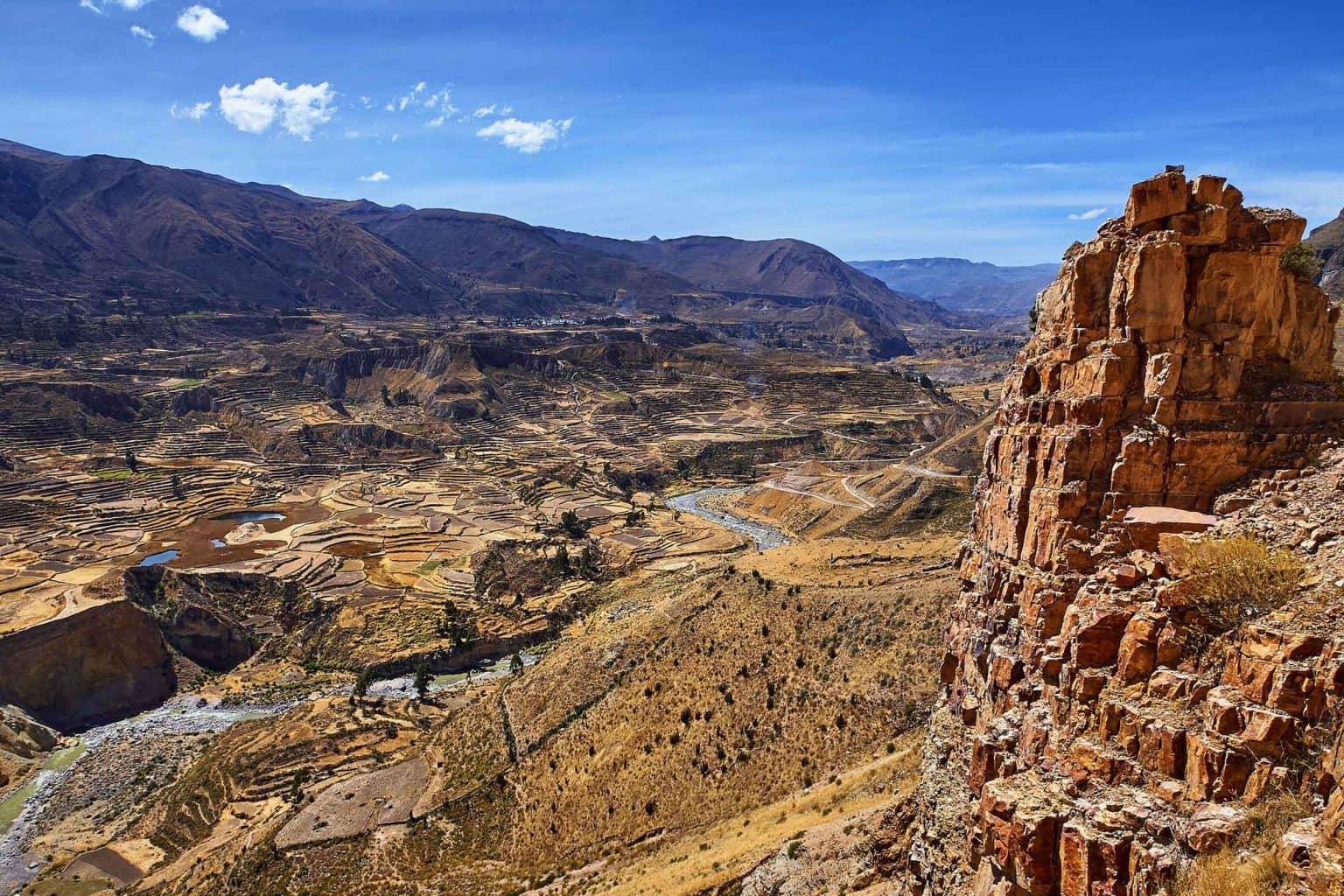
Begin the trek towards Capuliyoc pass, where you’re greeted with panoramic views of the Pedroyoc snow capped mountain and the stunning vistas of the Apurímac canyon, one of the deepest canyons in the Americas. The region’s rich history is palpable, with the canyon serving as a natural barrier protecting the lesser-known Inca sites from Spanish invaders.

Descend to Chiquisca to camp. As you make your descent, imagine the ancient travelers who once traversed these paths. Camping in Chiquisca offers a serene end to an exhilarating day, under the stars of the southern Peruvian sky.

  • Meals: Lunch, Dinner
  • Accommodation: Camping (2 per tent)
  • Altitudes: Start at 2850m, highest at Capuliyoc 3000m, camp at Chiquisca 1750m
  • Distance: 16 Km
  • Walking Time: 6-7 hours

Day 2Chiquisca – Maranpata – Choquekirao Ruins

From Chiquisca, descend to Rosalina Beach, where you’ll cross the mighty Apurímac River. This area is a splendid mix of geography and history, once serving as a crucial crossing for ancient messengers and local tribes.

Climb to Marampata for views of Choquequirao. Ascending to Marampata, you’re rewarded with your first glimpse of Choquequirao, often referred to as the ‘sister city’ of Machu Picchu. This lesser-known ruin offers a more intimate glimpse into Inca architecture and civilization.

Guided tour of Choquequirao, where you will explore vast plazas, sacred temples, and royal residences, all steeped in centuries of Andean history. Camping near the site allows you to ponder the lives of those who walked these grounds centuries ago.

  • Meals: Breakfast, Lunch, Dinner
  • Accommodation: Camping (2 per tent)
  • Altitudes: Lowest at Rosalina 1550m, Marampata 2850m, Choquequirao 3033m
  • Distance: 15 km
  • Walking Time: 7-8 hours

Day 3Choquekirao Ruins – Maranpata – Chiquisca

After enjoying sunrise over Choquequirao, spend a moment to appreciate the peace and beauty of this ancient place. As the sun rises, it casts light over the stonework, highlighting the precision and skill of Inca builders.

Trek back down the same path to camp at Chiquisca. Reflect on the enduring nature of the Inca civilization as you retrace your steps through these historical landscapes.

  • Meals: Breakfast, Lunch, Dinner
  • Accommodation: Camping (2 per tent)
  • Altitudes: Start at Choquequirao 3200m, end at Chiquisca 1500m
  • Distance: 17 km
  • Walking Time: 8-9 hours

Day 4Cchiquisca – Cachora – Cusco

Depart Chiquisca to Cachora, enjoying the early morning tranquility. The journey back is a time to reflect on your experiences and the historical wonders you’ve witnessed.

Meet our transport in Cachora for the drive back to Cusco, arriving by 7-8 PM. As you return, carry with you not just memories but also a deeper appreciation for the rich cultural tapestry of Peru.

  • Meals: Breakfast, Lunch
  • Accommodation: Camping (2 per tent)
  • Altitudes: Highest at Capuliyoc 3000m
  • Distance: 15 km
  • Walking Time: 7-8 hours
Photos
FAQs

1.What level of physical fitness is required for this trek?

This trek requires a moderate level of physical fitness. While the terrain can be challenging with steep ascents and descents, it is manageable for individuals with a regular exercise routine. However, it’s essential to be prepared for long days of walking, ranging from 6 to 9 hours, and to acclimate to the altitude in advance.

2.What type of accommodation is provided during the trek?

Accommodation during the trek is camping in shared tents, with two people per tent. The campsites are set up in scenic locations along the route, offering a chance to immerse yourself in the natural beauty of the Peruvian landscape.

3.What meals are included, and are there vegetarian/vegan options available?

The trek includes three meals a day: breakfast, lunch, and dinner. Vegetarian options are available, and if you have specific dietary requirements, please inform us in advance, and we will do our best to accommodate your needs.


4.What should I pack for the trek?

Recommended items to pack include sturdy hiking boots, comfortable clothing suitable for layering, a daypack, sunscreen, a hat, sunglasses, a refillable water bottle, personal toiletries, a sleeping bag, and any necessary medications. A detailed packing list will be provided upon booking.


5.Is there a minimum age requirement for participation in this trek?

There is no strict minimum age requirement for this trek, but participants should be in good physical health and capable of hiking for extended periods over varied terrain. Families with children should consider whether their kids are accustomed to such activities and consult with us for further guidance.

1 Review
Sort By:RatingDate

Sarah M.

Solo Traveller

Embarking on the Choquequirao trek was truly a journey of a lifetime. From the moment we were picked up in Cusco, the organization and professionalism of the team were evident. The trek itself was challenging but incredibly rewarding. The first day’s hike to Chiquisca offered breathtaking views of the Apurímac canyon, and camping under the starlit sky was a magical experience.

The highlight, of course, was reaching Choquequirao on the second day. The sight of the ancient ruins emerging from the mist was awe-inspiring. Our guide provided insightful commentary, and exploring the ruins felt like stepping back in time. Camping near Choquequirao allowed us to fully immerse ourselves in its history and ambiance.

January 10, 2022