

Ausangate Trek 5 Days

(1 Review)
Price
From$550
Price
From$550
Booking Form
Enquiry Form
Full Name*
Email Address*
Your Enquiry*
* I agree with Terms of Service and Privacy Statement.
Please agree to all the terms and conditions before proceeding to the next step
Available: 10 seats
* Please select all required fields to proceed to the next step.

Proceed Booking

Save To Wish List

Adding item to wishlist requires an account

354

Do you have any questions or need assistance?

We’re here for you. Don’t hesitate to call us and speak with our team of skilled professionals.

+51 984751486

perutravelcompany@gmail.com

perutraveldev

Length

5 Days / 4 Nights
perutraveldev

Group

10
perutraveldev

Trip Style

Trekking Tours
perutraveldev

Grading

3, 4 of 5.
Overview

Discover the Spirit of Ausangate

Marvel at the majestic Apu Ausangate, the revered guardian deity of the Andean people. At 6,384 metres, this sacred mountain is believed to be the protector and blessing of the land and a symbol of spirituality and respect for nature.

Remarkable mountain glacier. If you’re looking for an exhilarating challenge and breathtaking views, climbing Ausangate Snow Peak is an experience that will ignite your spirit and leave you with memories to cherish forever.

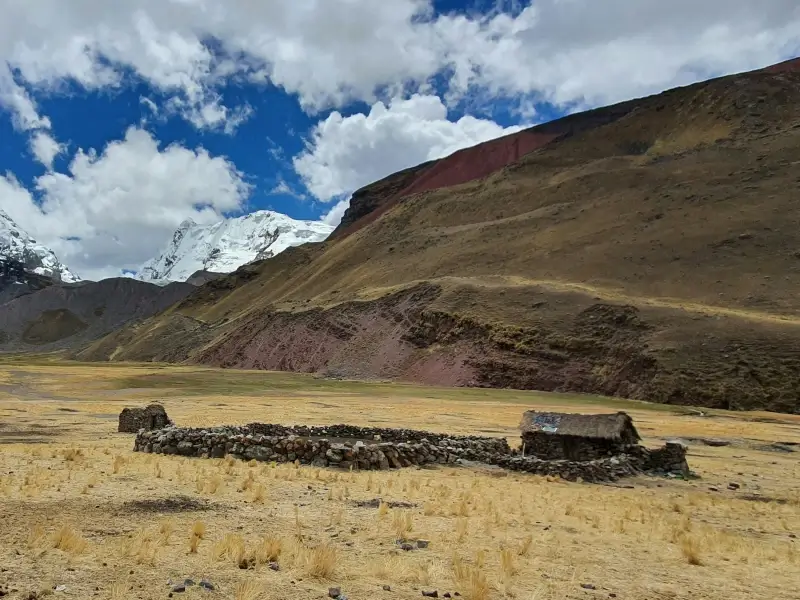
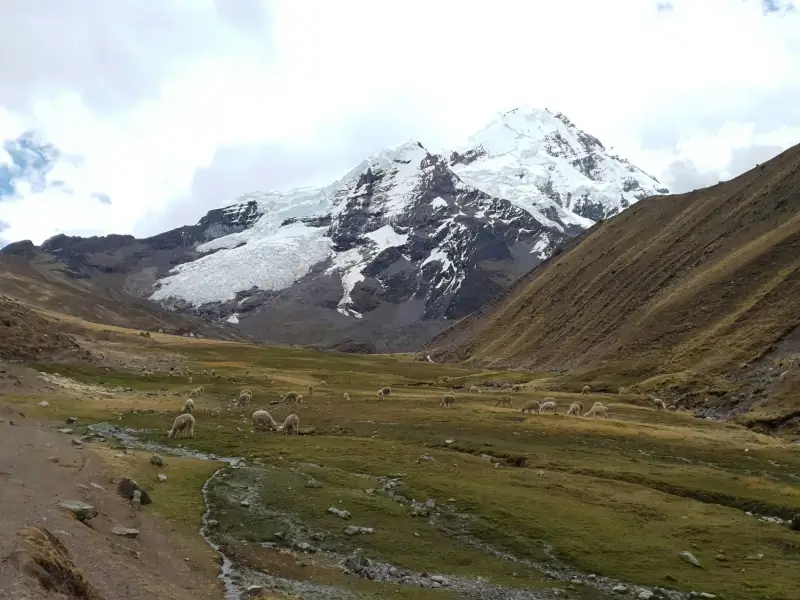
Immerse yourself in the untouched beauty of the Andes as you trek through valleys, meadows, and rocky terrain. Keep an eye out for Andean wildlife such as llamas, alpacas, and vicuñas grazing freely in their natural habitat.

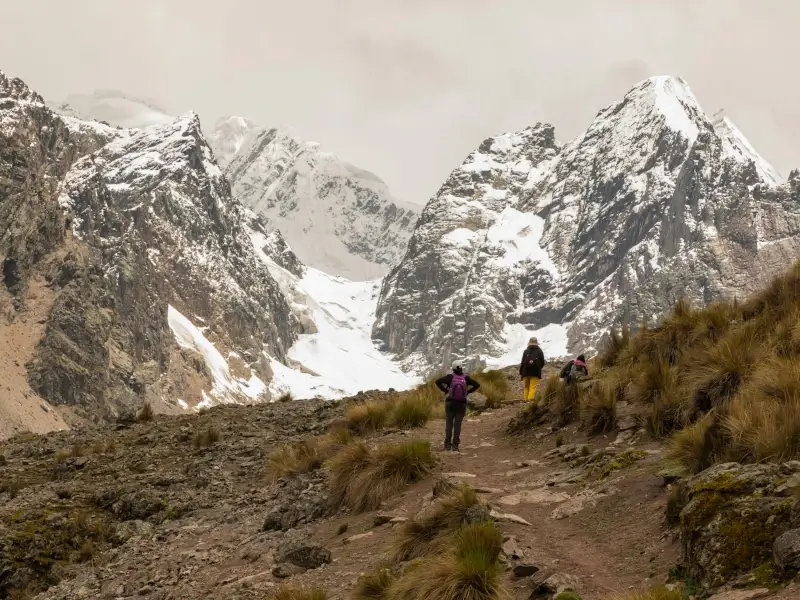
Be captivated by the awe-inspiring panoramic views of snow-capped peaks and glacial valleys. Feel the spiritual energy that emanates from the sacred landscapes, filling you with a sense of peace and wonder.

Highlights

  • Marvel at the sacred Ausangate Mountain.
  • Trek around Ausangate, the highest and most sacred mountain in Cusco.
  • Discover turquoise lakes, alpacas and snow-capped peaks deep in the heart of the Andes.
  • Cross high mountain passes and enjoy unforgettable panoramic views.
  • Relax in the natural hot springs at Upis and Pacchanta.
  • Marvel at the sacred Ausangate Mountain.
  • Enjoy breathtaking snowcapped peaks and glaciers.

5 Days Ausangate trek at Glance. 

Day 1: Cusco – Tinke – Upis

The excursion begins with a scenic drive from Cusco to the traditional Andean village of Tinki. From there, you will start hiking across the rolling highlands, which are filled with alpacas and offer breathtaking mountain views. Finish the day by soaking in the natural hot springs of Upis, located below the majestic Ausangate Mountain.

Day 2: Upis – Lake Puka Q’ocha.

Trek over the impressive Arapa Pass and descend through tranquil valleys to reach the stunning, emerald-coloured Lake Jatun Puqa Q’ocha. Camp beside Lake Puka Q’ocha’s turquoise waters and enjoy the peaceful beauty of the Andes at sunset.

Day 3: Lake Puka Q’ocha – Q’ampa.

Climb to Palomani Pass (5,200 m/17,056 ft), the highest point of the trek, to enjoy spectacular views of Ausangate and the surrounding peaks. Then, descend into a peaceful valley and continue through open grasslands to your campsite, which is located near the beautiful Soyrococha Lagoon.

Day 4: Q’ampa – Pacchanta.

Cross the Q’ampa Pass and follow the route lined with colourful glacial lakes. Arrive in the charming village of Pacchanta, where you can rest in natural hot springs and enjoy the stunning views of Ausangate mountain while celebrating your journey.

Day 5: Pacchanta – Tinke – Cusco.

Enjoy a peaceful morning hike back to Tinki, taking time to reflect on your incredible journey through the high Andes of Peru. After enjoying one last lunch, head back to Cusco, taking with you unforgettable memories of majestic mountains, stunning lakes and the spirit of Ausangate.

Inclusions

  • Briefing before the trek: briefing the day before the excursion, around 7:00 p.m., led by the guide. Please provide the name of the hotel where you are staying in Cusco.
  • Hotel Pickup: We will pick you up from your hotel starting at 4:30 a.m
  • Experienced and licensed guides. Spanish, English and Quechua speaking guides will accompany you during the excursion to immerse you in the local history and traditions of the Andes.
  • Transportation from : Cusco to Tinki (starting point), return to Cusco after completing the hike.
  • Expert local chefs: We have experienced cooks trained in adventure and mountain cooking. We use new kitchen equipment and kitchenware, as well as a dining tent with portable chairs and tables.
  • Meals: Enjoy nutritious meals during the excursion (4 breakfasts, 4 lunches and 4 dinners). The food is balanced to keep you energized along the way, with a free vegetarian option upon request in advance.
  • Muleteers & horses to carry : This experienced team will transport all necessary gear and supplies on horses or mules, so you can enjoy the trek without having to carry heavy loads.
  • 1 emergency horse : A Extra horse is provided for participants who may require assistance due to fatigue, illness, or a slower pace during the trek.
  • Accomodations In Tents :4 nights in spacious twin tents, each equipped with comfortable mattresses for a restful and peaceful sleep.

Excludes

  • Meals (breakfast and Lucnh): Breakfast on the first morning and lunch on the last .
  • Hot Springs :If you would like to relax in the thermal baths, it costs 5 soles at Upis and 5 soles at Pacchanta, payable at the entrance.
  • Sleeping bag: If you don't have a sleeping bag, you can rent one from us. The sleeping bags we have are specially designed to keep you warm during the trek, where temperatures can be as low as -10°C. The rental cost is 40 soles (10 dollars) for the whole trip
  • Gratuities for Guides and Staff : Tips for guides, drivers, horsemen, and staff are not included. Tipping is optional but appreciated. While the trek team may expect tips, it is entirely up to you. We want to emphasize that tipping is voluntary, not mandatory.
  • Travel Insurance: We would advise acquiring one in your country of residence, as obtaining travel insurance in Peru can be Difficult .

What to Bring

  • Original passport: you can't use a copy of your passport; you need to make sure your original passport is valid for at least six months to enter and leave Peru. Also, make sure your passport has two blank pages for the stamps when you come in and out.
  • Good-quality daypack: It's really important to find a good backpack that's comfortable, light and small, to fill in and carry all your belonging
  • Botle water or Camel Bag:
  • Trekking poles: We really recommend them for the Ausangate Trek and they are very useful. You can rent them from us.
  • Hiking water proof boots: With ankle protectors
  • Sleeping bag: When you buy a sleeping bag find one that is big enough for you. and put it in a waterproof bag so it doesn't get wet on the hike. also we recommend sleeping bags that can keep you warm down to -10°C. You can also rent sleeping bags from us.
  • Head lamp: This equipment is essential for anyone taking the Salkantay Trek to Machu Picchu. You can also bring a torch.
  • Emergency money: Please remember to bring extra money for any emergencies that might happen on the trip. is ideal to bring 300 soles/90 dollars and in cash.
What to Pack

Packing List

F.A.Q. ¿What should I pack in my backpack?

if you will hike Ausangate trekking, it’s essential to prepare your backpack and duffel bag in advance. We recommend bringing one or two large backpacks.
For the 5-day trek, carry only the essentials any extra items or luggage can be safely stored at your hotel in Cusco or in our secure storage room.

what to pack in your personal Backpack?

During the days on the trek, Remember, you will be carrying your backpack with you for the entire trek, so you should carry a light, comfortable and good quality backpack.

here, we give you the list of items which you have to carry in your personal backpack. 

  • Hats and sunglasses: The sun is intense at high altitude and you should protect your eyes from the glare. Wear one that offers UV protection and is comfortable.
  • Rain gear: The trail can be wet especially in the rainy season. Have quality gear and clothing with materials such as Gore-tex that will keep your skin dry while you perspire during the hike.
  • Warm clothing: During the Inca Trail, where the temperature fluctuates during the day and night, it is mandatory to have good clothing equipment such as: fleeces, long-sleeved shirts, down jackets and a waterproof layer.
  • Sunscreen: Choose a good sunscreen (high factor) and apply it before starting the hike and regularly during the day if you are sweating.
  • Hand sanitizer: Carry a good hand sanitizer to disinfect hands before eating, drinking and after using the bathroom. We recommend carrying a small bottle of hand sanitizer throughout the day.
  • Headlamp: carrying a headlamp is especially useful for those who hike the Inca Trail because it keeps your hands free for other tasks. It is useful to choose a headlamp for brightness, weight and comfort.
  • Snacks: bring snacks that are rich in energy and easy to digest. This, because chocolate bars or cookies are not ideal, as they can be heavy for the stomach and leave you with an impression of sluggishness, so we recommend taking granola bars or a mixture of nuts which will give enough energy to perform the walk.
  • Extra money: take money preferably in soles for drinks, tips and souvenirs: during the excursion you will find facilities or bathrooms where you will have to pay for the use of some of them, especially the first day.

What to pack in your personal Duffel bag?

We will provide you with a duffel bag to pack your belongings that you don’t need during the day, the porters will carry the duffel bag, and please note that it must have a maximum weight of 7 Kg, including your sleeping bag and your air mattress (if you bring or rent one).

The duffel bag will be provided to you one day before the trek at your hotels or our office.
Sleeping bag: if you don’t have one, you can rent it from us; also if you want to buy it it has to have the estimated weight of 2 kilos and remember to pack it in a plastic bag to keep it during the excursion, we recommend a -10°C sleeping bag.

  • Rain Gear: The trail can be wet especially in the rainy season. Have quality gear and clothing with materials such as Gore-tex that will keep your skin dry while you perspire during the hike.
  • Warm jacket: The weather during the excursion fluctuates and can drop sharply during the day and night, so it is essential to bring layers of clothing for the sun and a waterproof outer layer in case of rain or snow
  • 4 to 5 T-shirts: Absorbent T-shirts that dry quickly are recommended. Synthetic fabrics such as polyester or nylon are the best choice, as they will hold sweat and dry quickly, avoid cotton shirts as they retain moisture and cause chafing and are difficult to dry
  • 2 to 3 trekking pants: there are a variety of types of trekking pants one of them is the cargo pants which have large pockets on the side of the legs and the convertible pants have legs that zipper at the knee, those are ideal especially in hot climates or changing conditions during the trail for women leggings or leggings work perfectly
  • 4 pairs of underwear: wearing a sports bra and compression shorts will be helpful and keep you comfortable to avoid chafing. If you are hiking in cold weather, wear thermal underwear that will keep you warm
  • Snacks: bring snacks that are rich in energy and easy to digest. This, because chocolate bars or cookies are not ideal, as they can be heavy for the stomach and leave you with an impression of sluggishness, so we recommend taking granola bars or a mixture of nuts which will give enough energy to perform the walk
  • Extra money: take money preferably in soles for drinks, tips and souvenirs: during the excursion you will find facilities or bathrooms where you will have to pay for the use of some of them, especially the first day.
Itinerary

DAY 1:Cusco – Tinqui – Upis

Your journey begins with an early morning departure from Cusco, heading southeast on a scenic three-hour drive to the small Andean village of Tinke, located at 3,800 meters (12,464 feet). Thanks to the modern Interoceanic Highway, this once remote village is now more accessible—yet it still retains its traditional charm.

From Tinke, you’ll begin your trek with a gentle three-hour hike through highland landscapes, surrounded by grazing alpacas and sweeping views of the Andes. Your destination is the natural hot springs of Upis, nestled at 4,400 meters (14,432 feet) with a stunning view of the majestic Ausangate Mountain towering at the end of the valley.

Here, you’ll set up camp for the night and have time to relax in the thermal waters, a perfect reward after your first day on the trail. Soak your muscles, take in the crisp mountain air, and let the peaceful energy of the Andes set the tone for the adventure ahead.

DAY 02: Upis – Lake Puka Q’ocha

After a hearty breakfast, you’ll begin your morning trek by crossing the impressive Arapa Pass, sitting at 4,850 meters (15,908 feet). The views from here are simply breathtaking—endless mountain ranges and the raw beauty of the Andes surrounding you in every direction.

From the pass, you’ll descend through a serene valley for about 3.5 hours, eventually reaching the striking emerald-green waters of Lake Jatun Puqa Q’ocha, where a scenic picnic lunch awaits. It’s the perfect spot to relax and soak in the natural beauty of the highlands.

By the afternoon, you’ll arrive at the stunning turquoise lake of Puqa Q’ocha, your campsite for the second night. Set against a dramatic backdrop of rugged peaks and wide open skies, this peaceful setting is ideal for unwinding and reconnecting with nature.

DAY 3:Lake Puka Q’ocha – Qampa

Today’s adventure takes you to the highest point of the trek—Palomani Pass, soaring at 5,200 meters (17,056 feet). The climb from the lake is challenging but incredibly rewarding, offering unforgettable panoramic views of the surrounding Andean peaks.

After reaching the pass, you’ll descend into a peaceful valley where you’ll stop to rest and enjoy a well-earned lunch in the heart of the mountains.

In the afternoon, the trail offers spectacular views of snowcapped peaks and, depending on the season and visibility, even Puca Punta or the famous Rainbow Mountain (Vinicunca) in the distance—a colorful natural wonder that adds magic to the landscape.

The journey continues through the vast, green expanse of Pampa Jutunpata, following the scenic Rio Q’ampa Valley. You’ll spend your third night camping near the tranquil Sorococha Lagoon, surrounded by serene alpine beauty.

DAY 4:Q’ampa – Pacchanta

Your final day on the trail begins with a gentle ascent through the small Andean community of Q’ampa, where traditional highland life continues as it has for generations. From here, you’ll head northwest toward the last high point of your trek—the Q’ampa Pass, reaching 5,000 meters (16,400 feet). It’s a truly inspiring spot, offering wide-open views and a real sense of achievement.

As you descend, you’ll pass several multi-colored glacial lakes, each more stunning than the last. You’ll pause for lunch beside the peaceful Q’oma Q’ocha Lake, an ideal setting to take in the pure mountain air one last time.

In the afternoon, after a few more hours of hiking, you’ll arrive at the welcoming village of Pacchanta, known for its soothing natural hot springs. Here, you can take a well-earned soak and maybe even treat yourself to a cold beer—cheers to an unforgettable adventure!

You’ll camp near Pacchanta, possibly with a local family, and have free time in the afternoon to explore this charming Andean village at your own pace. If you prefer, you also have the option to stay in a basic local guesthouse for your final night on the trail.

DAY 05: Pacchanta to Cusco

After breakfast, you’ll begin your final stage of your journey: with a 3-hour trek back to Tinke, retracing your steps through the serene Andean landscape. This part of the journey offers a chance to reflect on everything you’ve experienced the majestic peaks, the quiet valleys, the vibrant lakes, and the rich culture of the highlands.

Once you arrive in Tinke, you’ll have a bit of time to explore the village, connect with locals, or pick up a few last souvenirs before meeting your transport.

In the afternoon, you’ll board the vehicle for the scenic drive back to Cusco, arriving around 6:00 PM, with your heart (and memory card) full of unforgettable moments from the Ausangate trek.

Photos
FAQs

1.What is Ausangate, and where is it located?

Ausangate is a majestic mountain in the Andes of Peru, standing at 6,384 meters (20,945 feet) above sea level. It is located in the Cusco region, southeast of the city of Cusco. Ausangate is considered a sacred mountain by the local Quechua people and is a significant site for both trekking and cultural tourism.

2.What is the best time to visit Ausangate?

The best time to visit Ausangate is during the dry season, which runs from May to September. During this period, the weather is generally clear, making it ideal for trekking and enjoying the stunning views of the mountain and the surrounding landscape. However, be prepared for cold temperatures, especially at night.

3.What is the Ausangate Trek, and how difficult is it?

The Ausangate Trek is a challenging high-altitude trek that typically takes 5 to 6 days to complete. The trek circles around the Ausangate mountain, offering breathtaking views of glaciers, colorful lakes, and traditional Andean villages. Due to the high altitudes, reaching over 5,000 meters (16,400 feet) at certain points, the trek is considered difficult and is recommended for experienced hikers who are well-acclimated to the altitude.

4.Are there any cultural or spiritual practices associated with Ausangate?

Yes, Ausangate is considered a sacred mountain (Apu) by the local Quechua people. It is an important site for traditional Andean spiritual practices, including offerings and rituals. The mountain is also associated with the annual Qoyllur Rit’i festival, which is one of the most significant religious festivals in Peru, combining Catholic and indigenous beliefs. Pilgrims often journey to Ausangate as part of their spiritual devotion.

5.What kind of wildlife can I expect to see on the Ausangate Trek?

The Ausangate region is home to diverse wildlife, adapted to the high-altitude environment. Trekkers may encounter animals such as llamas, alpacas, vicuñas, and Andean condors. In some areas, you might also spot foxes or vizcachas (a type of Andean rodent). The region’s lakes are often home to waterfowl, including Andean geese and crested ducks.

1 Review
Sort By:RatingDate

Isaac N.

Solo Traveller

The scenery is otherworldly—think towering snow-capped peaks, vibrant turquoise lakes, and expansive valleys that make you feel like you’re in a nature documentary. Every day brings a new kind of beauty, and the sense of isolation adds to the magic.

August 29, 2024