
We’re here for you. Don’t hesitate to call us and speak with our team of skilled professionals.
+51 984751486
perutravelcompany@gmail.com
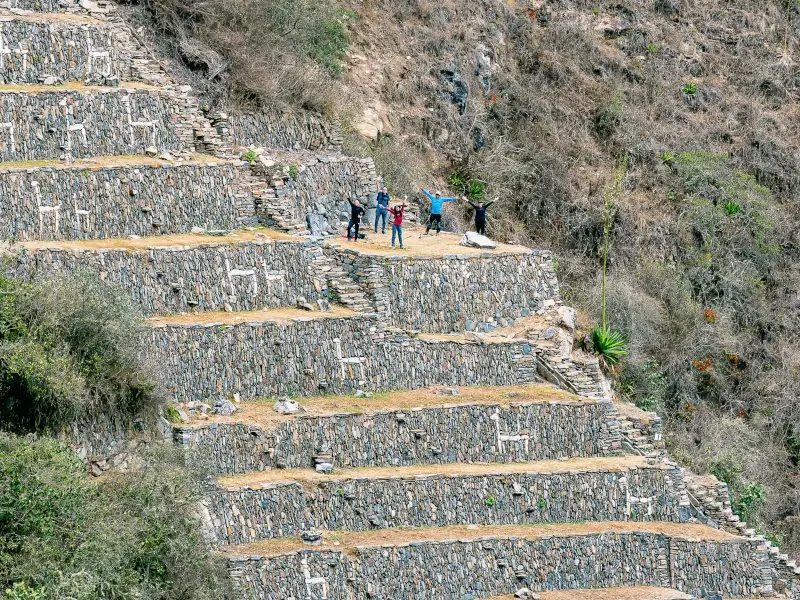
Choquequirao Archaeological Park, known as the “sister of Machu Picchu,” is a remote Inca archaeological site located high above the Apurímac River in the Peruvian Andes. Surrounded by snow-capped peaks, it was an important ceremonial center dedicated to Pachamama and the Apus. With only part of the site excavated, Choquequirao offers a unique combination of trekking adventure, Inca history, and untouched nature in Peru.
You will be picked up from your hotel in Cusco at around 5:00 a.m. and travel by private tourist transport for approximately 4 hours to Cachora, the starting point of your Choquequirao trekking adventure. Upon arrival, you will meet your trekking team, including muleteers and horses, and prepare for the hike into the Andes.
You will begin the trek with a steady ascent to the Capuliyoc Pass, where you will enjoy breathtaking panoramic views of the Apurímac Canyon and, on clear days, possible sightings of Andean condors. From there, you will descend through cactus-covered landscapes and rugged Andean terrain until reaching Playa Rosalina, located on the banks of the Apurímac River.
You will camp overnight at Playa Rosalina, surrounded by nature and the sounds of the river, ready for the next day’s ascent toward Choquequirao.
Playa Rosalina – Marampata – Choquequirao (Golden Cradle)
After an early breakfast, you will start a challenging uphill trek through a narrow Andean trail surrounded by lush vegetation and beautiful orchids. You will descend briefly to cross the Apurímac River and then begin a demanding ascent toward Santa Rosa, taking in the dramatic canyon landscapes along the way.
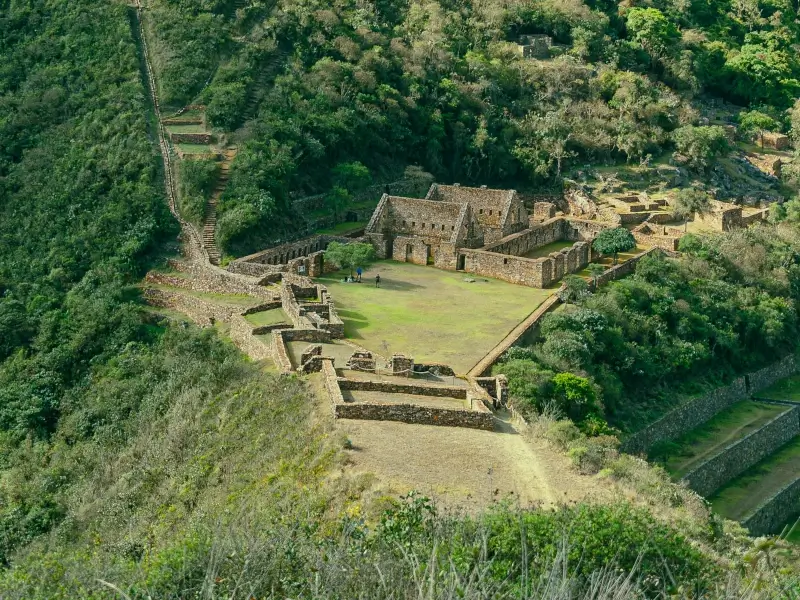
After a short rest, you will continue hiking for approximately 3.5 hours until reaching Marampata, where you will stop for lunch and enjoy panoramic views of the Apurímac Canyon. From here, you will continue to the legendary archaeological site of Choquequirao Archaeological Park, known as the “Golden Cradle” and the sister city of Machu Picchu due to its similar Inca architecture and dramatic mountain setting.
The site is located around 1,500 meters above the Apurímac Canyon, offering breathtaking views where Andean condors can often be seen soaring overhead. After exploring the area, you will camp near Choquequirao (3,050 m), surrounded by pristine Andean nature.
After breakfast at around 7:00 a.m., you will begin a challenging trek through the Choquequirao archaeological area, continuing uphill along narrow trails surrounded by cloud forest, mountains, and deep valleys until reaching the Choquequirao Pass.
After approximately 5 hours of hiking, you will continue through the agricultural terraces of Pinchinoyoc (2,750 m), an impressive Inca site known for its stepped terraces and fertile landscapes. Along the way, you will observe diverse bird species, orchids, and local coca plantations.
You will stop for lunch near Río Blanco, where you can also enjoy a refreshing optional swim in the cold mountain river. You will cross the river on foot, as there are no bridges in this remote area.
After a short rest, you will begin a steep ascent of approximately 3 hours to reach your campsite at Maizal, located high above the valley near the sacred Apus of the Incas.
You will camp in a remote mountain setting at around 3,000 m, surrounded by Andean nature and silence.
Maizal – Corihuarachina Glacier – Minas Victoria – Yanama
After an early breakfast, you will begin a scenic and challenging trek through the Corihuarachina glacier area, known for its ancient Inca canals and archaeological remains.
You will continue uphill through lush cloud forest and then into the high Andean puna, covered with ichu grass. Along the route, you will pass the historic Minas Victoria, an old silver mining site used during both Inca and colonial times.
As you approach higher altitude, you will walk on original Inca trails and enjoy breathtaking views of the surrounding mountains. You will reach the Victoria Pass (approx. 4,200 m), where you will have lunch with panoramic views of the Choquetakarpo mountain. On clear days, you may also observe Andean condors soaring above the valley.
After lunch, you will descend to your campsite in Yanama, a remote mountain village surrounded by glaciers and high peaks.
After an early breakfast, you will begin a challenging ascent to the highest point of the trek, the Yanama Pass (approx. 4,200–4,700 m, depending on conditions). Along the way, you will enjoy spectacular views of the Saqsarayoc and Pedreyoc mountain ranges.
As you climb, you will pass through changing landscapes, from lush highland valleys to cloud forest and open Andean puna covered with ichu grass. In clear weather, you may also walk across patches of snow and observe Andean condors soaring above the valleys.
After reaching the pass, you will begin a long and scenic descent through misty mountain terrain, grassy fields, and small forested areas, crossing rustic wooden bridges along the way. You will continue toward the remote community of Totoral, where you will camp surrounded by untouched nature and stunning mountain scenery.
After breakfast, you will begin a 7-hour descent from the high Andes (approx. 3,850 m) into the lush Santa Teresa Valley, reaching La Playa at 2,125 m. Along the way, you will experience a dramatic change in landscape, from high-altitude grasslands to tropical cloud forest.
You will observe rich biodiversity, including hummingbirds, woodpeckers, orchids, and begonias. As you descend, you will follow trails along the Santa Teresa River, passing small plantations of bananas, coffee, and passion fruit.
You will also stop at natural waterfalls where you can enjoy a refreshing swim in crystal-clear mountain water. The route continues through the fertile valley, with increasing signs of local life and agriculture.
La Playa is the largest village along the route, where you will find small local shops and basic services. You will camp in a beautiful natural setting surrounded by mountains and tropical vegetation.
After breakfast, you will take a local transport to the town of Santa Teresa, crossing the Vilcanota River and enjoying beautiful high jungle landscapes. From there, you will continue by vehicle to the Hydroelectric station Central Hidroelectrica Machu Picchu, where you will enjoy spectacular views of Machu Picchu from a different angle and the impressive Aobamba Canyon.
You will have your last lunch in this area before starting a scenic 3-hour walk along the train tracks toward Aguas Calientes (Machu Picchu town). On the way, you will pass lush vegetation, rivers, and optional viewpoints of the surrounding Inca trails.
Upon arrival in Aguas Calientes, you may optionally visit the nearby hot springs Cocalmayo Thermal Waters or relax in town.
You will spend the night in a comfortable hostel in Aguas Calientes, preparing for the visit to Machu Picchu the next day.
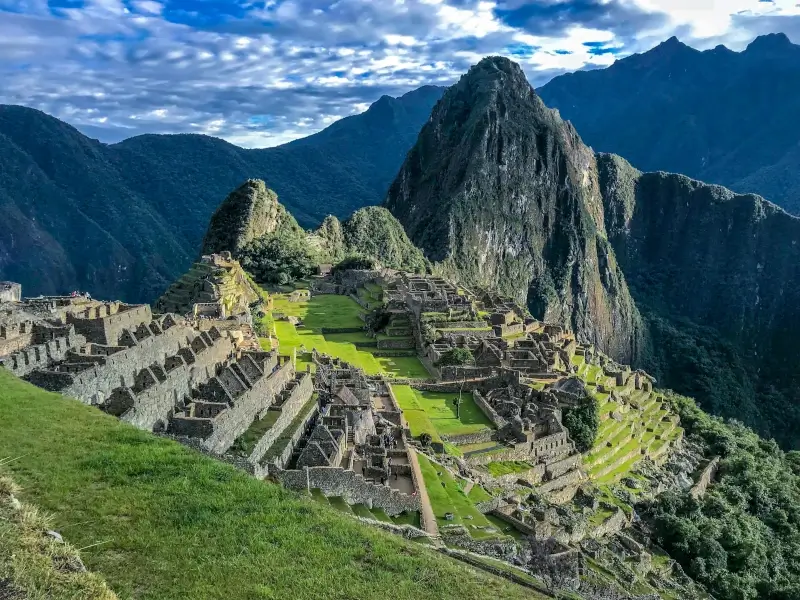
After an early breakfast in Aguas Calientes, you will take the bus or hike up to the legendary citadel of Machu Picchu. Upon arrival, you will enjoy a guided tour of the archaeological site, exploring its temples, terraces, and sacred Inca structures while learning about its history and significance.
After the guided visit, you will have free time to explore Machu Picchu on your own. You may optionally hike Huayna Picchu or visit the Moon Temple for additional panoramic views of the surrounding mountains.
At the designated time, you will meet your guide and return to Aguas Calientes around 3:00 p.m. Later, you will board the train back to Cusco, arriving approximately at 8:00 p.m.
Choquequirao is an ancient Inca city often referred to as the “sister city” of Machu Picchu. It is located in the Vilcabamba mountain range in the Cusco region of Peru, at an altitude of around 3,050 meters (10,010 feet) above sea level. The site is known for its remote location and stunning archaeological remains.
The hike to Choquequirao is considered challenging, requiring a good level of physical fitness. The trek typically takes 4 to 5 days round-trip and involves steep ascents and descents, crossing valleys and rivers. The journey is demanding but rewarding, offering breathtaking views of the Andes and a unique experience at the less-crowded archaeological site.
While Choquequirao shares some similarities with Machu Picchu, such as its Inca architecture and mountain location, it is less excavated and much less visited. This gives Choquequirao a more authentic and serene atmosphere. The site is also larger than Machu Picchu, with many of its structures still covered by jungle, adding to its sense of mystery.
The best time to visit Choquequirao is during the dry season, which runs from May to September. During these months, the weather is more predictable, with clear skies and less rain, making the trek safer and more enjoyable. The rainy season, from October to April, can make the trails muddy and more difficult to navigate.
The trek to Choquequirao offers the chance to see a variety of wildlife, especially birds. You might spot Andean condors soaring above the valleys, as well as other bird species like hummingbirds and toucans. Mammals such as spectacled bears, deer, and foxes may also be seen, though they are more elusive. The diverse ecosystems you pass through, from cloud forests to high-altitude grasslands, are home to a rich array of flora and fauna.
Embark on the 8-Day Choquequirao & Machu Picchu Trek for a truly unique adventure, exploring the remote ruins of Choquequirao and the iconic Machu Picchu in a breathtaking journey.